
ST. PETERSBURG, FLORIDA
Historic Old Northeast
Brick streets, old trees and some of St. Petersburg’s most recognizable residential architecture.
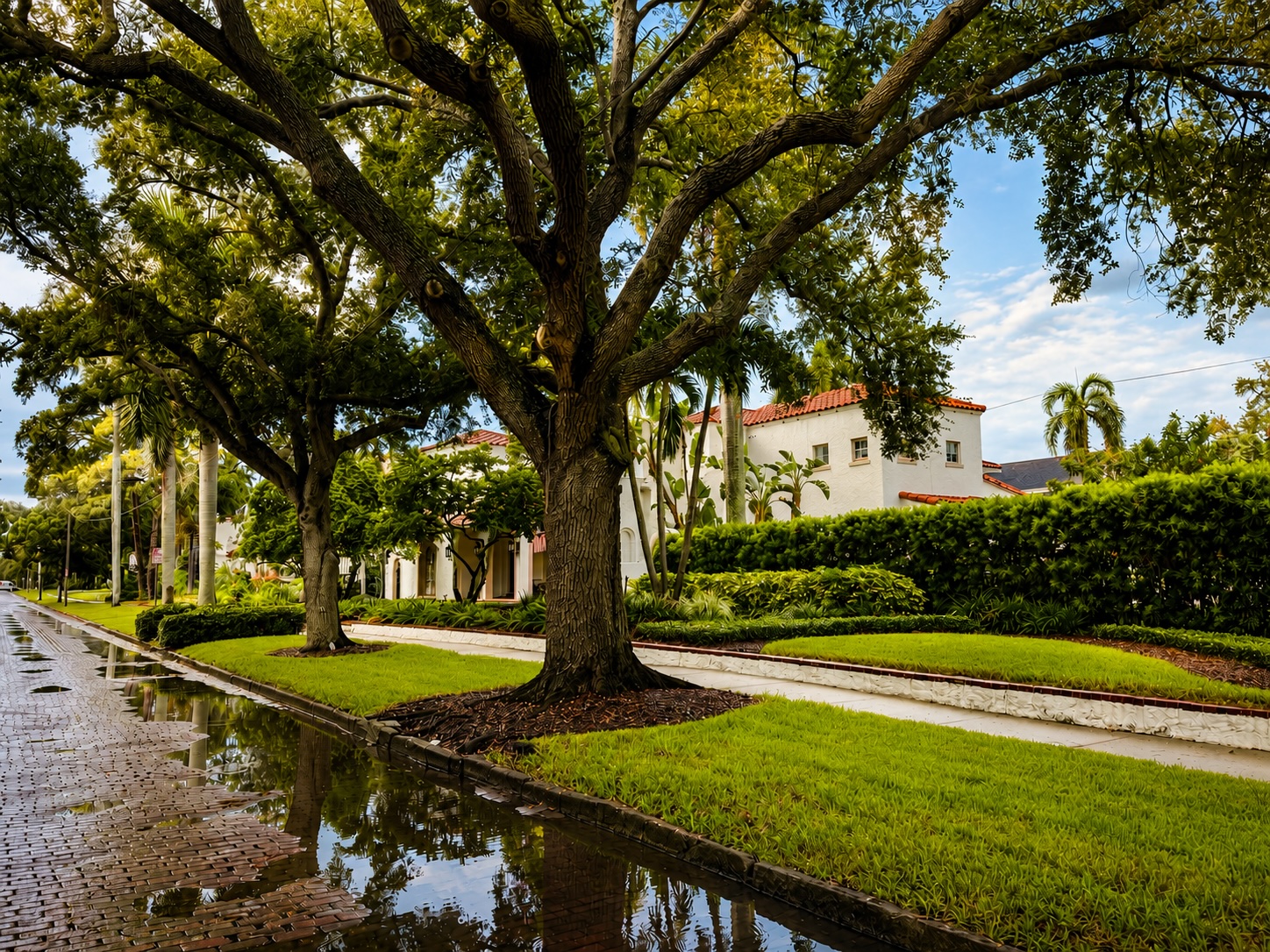
Just north of downtown St. Petersburg, Historic Old Northeast feels established in the best possible way. Brick streets, mature live oaks, front porches and an unusually varied collection of architecture give the neighborhood a presence that is hard to mistake for anywhere else in the city.
Its location is a large part of the appeal. Residents can be close to the waterfront, downtown restaurants, museums and parks while coming home to streets that feel distinctly residential.
The neighborhood
Old Northeast at a Glance
Historic Old Northeast sits immediately north of downtown St. Petersburg, between the city center and Coffee Pot Bayou, with Tampa Bay forming its eastern edge. The area people commonly know as Old Northeast overlaps substantially with the North Shore Historic District, which was added to the National Register of Historic Places in 2003.
What makes Old Northeast distinctive is not a single architectural style or a handful of landmark houses. It is the way the pieces work together: early-20th-century homes, apartment buildings, alleys, mature landscaping, brick streets, granite curbs and stretches of hexagonal-block sidewalk. Many streets and alleys still follow the basic pattern established in the neighborhood’s original plats.
The architecture is unusually varied. Historic documentation identifies examples of Frame Vernacular, Masonry Vernacular, Craftsman and Bungalow, Colonial Revival, Classical Revival, Prairie, Mediterranean Revival, Mission, Tudor Revival, Minimal Traditional, Art Moderne, Monterey and later Ranch architecture within the historic district.
That mix is part of why one block can feel noticeably different from the next. Old Northeast was not built from one plan at one moment. It accumulated over decades.
The streets are part of the architecture
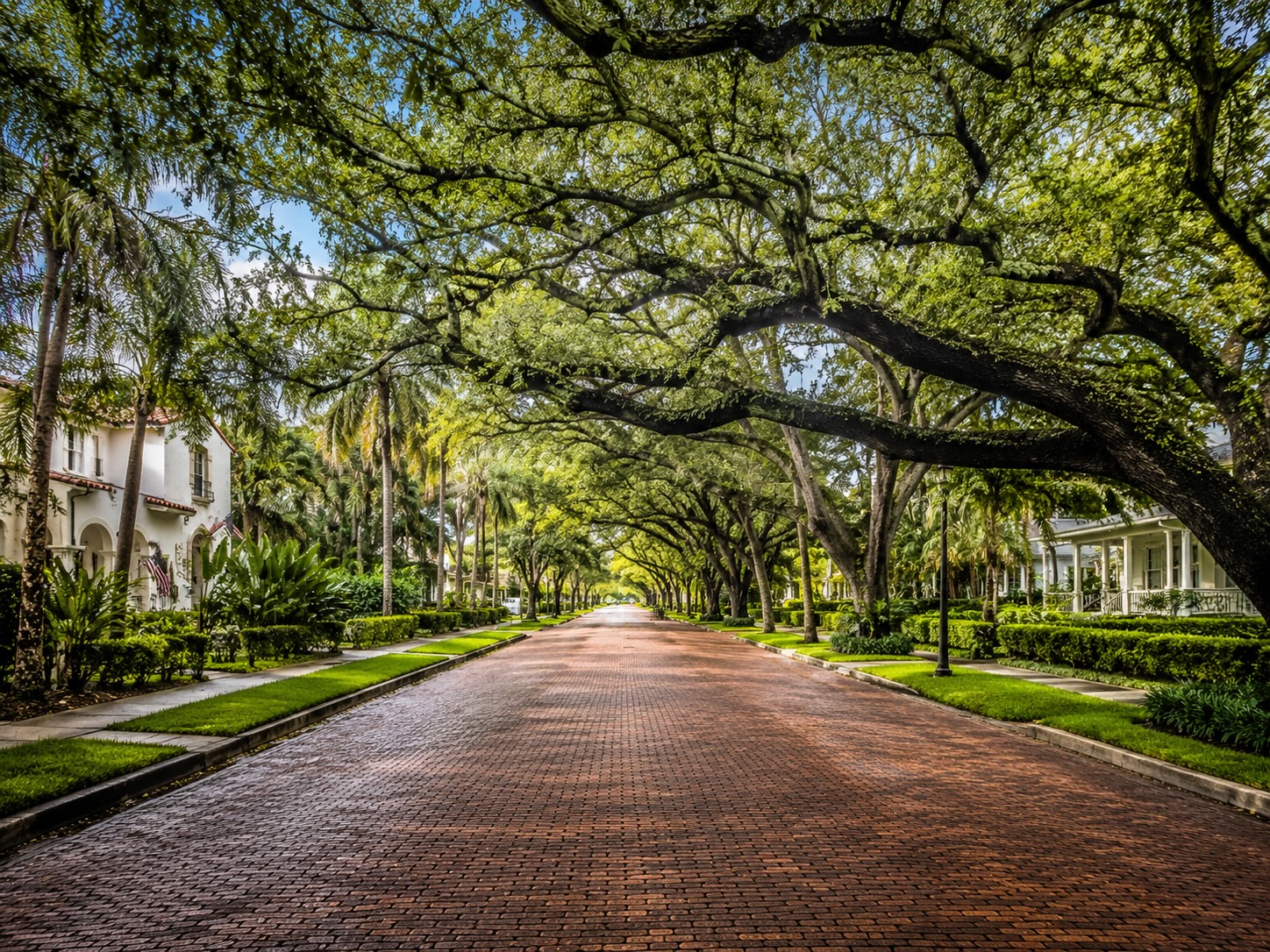
The houses get the photographs. The streets are what you remember. Brick underfoot, live oaks meeting over the pavement, sidewalks that have been used for decades — the public ground here is not leftover space. It is part of the architecture.
Porches sit close enough to the walk to feel neighborly. Garden walls, hedges and setbacks give each lot a little privacy without turning the block into a corridor of garage doors. The planting has had time to become structure: canopy, shade, a layered edge between house and street.
Walk it slowly and the materials start to stack — brick, stucco, wood, tile, live oak, lawn. The neighborhood’s character is not only in the façades. It is in the way those façades meet the ground.
Old Northeast’s brick streets are more than a visual motif. Historic documentation records original red-brick paving on many streets and alleys, along with granite curbs and hexagonal-block sidewalks. Those details help explain why the neighborhood can feel cohesive even when the houses themselves vary dramatically in age and architectural style.

History
How Old Northeast Came to Be
The story of Old Northeast is part of the story of St. Petersburg becoming a city.
In the first years of the 20th century, St. Petersburg was changing quickly. A streetcar opened in 1904, streets were being improved, new transportation connections were arriving and developers were acquiring land for a growing city. Among the figures associated with this period were Noel Mitchell, Charles Hall, C.M. Roser and C. Perry Snell.
The land that became North Shore had previously been sparsely settled, particularly around Coffee Pot Bayou. C. Perry Snell became one of the area’s most influential developers. After making St. Petersburg his permanent home in 1904, Snell helped form the Bay Shore Land Company and participated in subdivisions that became precursors to the North Shore neighborhood.
By 1910, Snell and J.C. Hamlett had platted additional land in the area. A streetcar spur extending toward Coffee Pot Bayou helped make the northern residential districts more accessible, and houses appeared throughout the 1910s.
Then came the Florida land boom.
During the 1920s, residential development accelerated dramatically throughout St. Petersburg. Snell platted C. Perry Snell’s North Shore Addition in 1920 and Granada Terrace in 1924. Landscaping and visual character were important parts of these developments, with palms, magnolias, oaks and decorative elements contributing to the streetscape. Granada Terrace introduced curving streets, landscaped spaces and a particularly strong Spanish-influenced identity.
The period also explains much of the architectural variety that remains today. Bungalows, Colonial Revival houses and vernacular homes appeared alongside the Spanish and Mediterranean Revival architecture strongly associated with Florida’s boom years.
Development continued after the land boom ended, which is one reason Old Northeast does not feel like a neighborhood frozen at a single moment in 1925. Buildings from several periods became part of the larger neighborhood fabric.

Why that history still matters
You can still read that history while walking through Old Northeast.
Some streets follow a straightforward grid. Granada Terrace breaks from that rhythm with curved streets and landscaped spaces. Alleys remain behind many blocks. Older garages and garage apartments survive behind houses. Brick paving, granite curbs and hexagonal sidewalks remain part of the historic streetscape.
That is one reason Old Northeast feels different from a neighborhood where history survives only in individual buildings.
Here, the street itself is part of what survived.
Historical and architectural information informed by National Register of Historic Places documentation for the North Shore Historic District and City of St. Petersburg historic-preservation resources.

A neighborhood built in layers
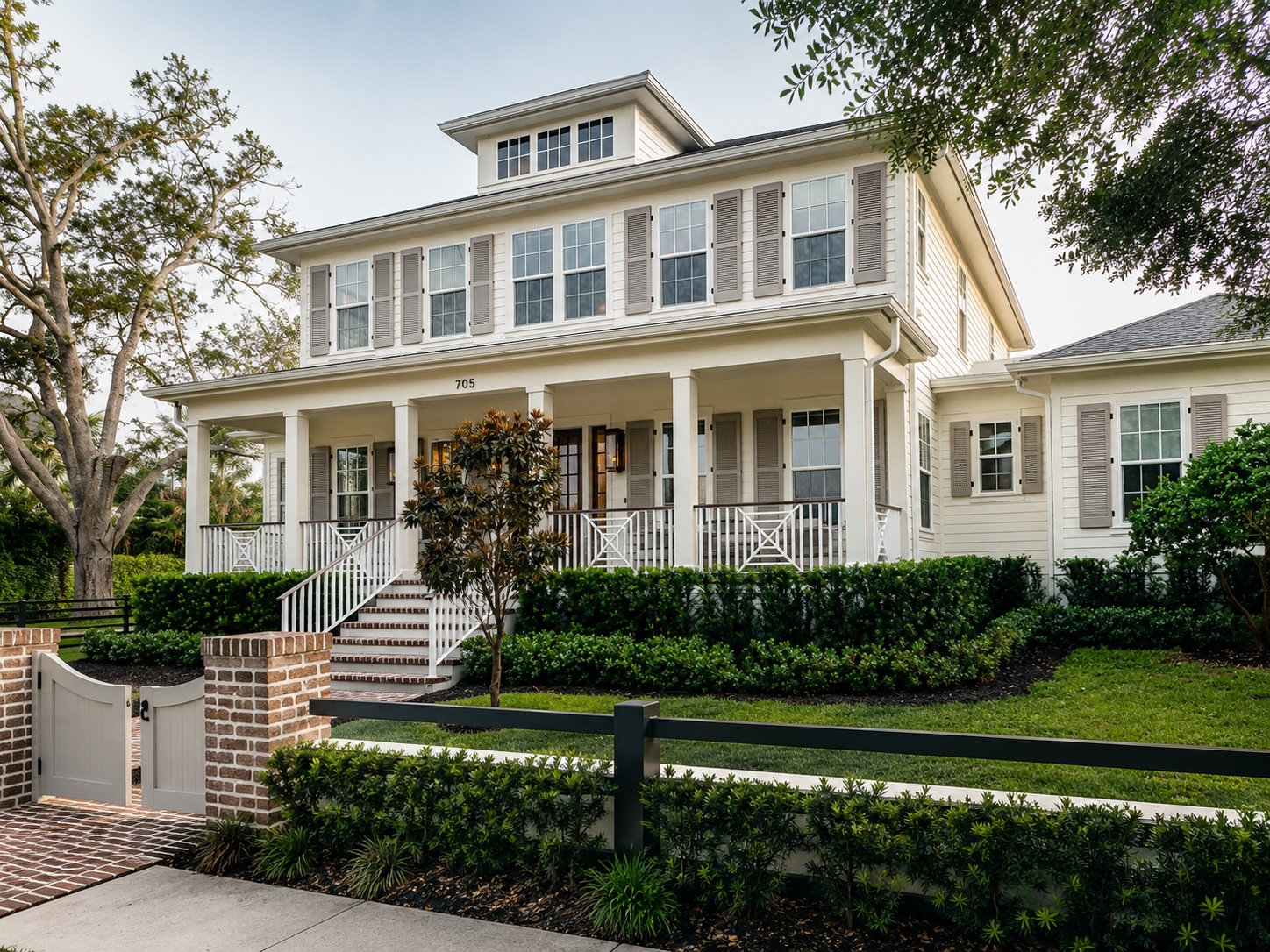
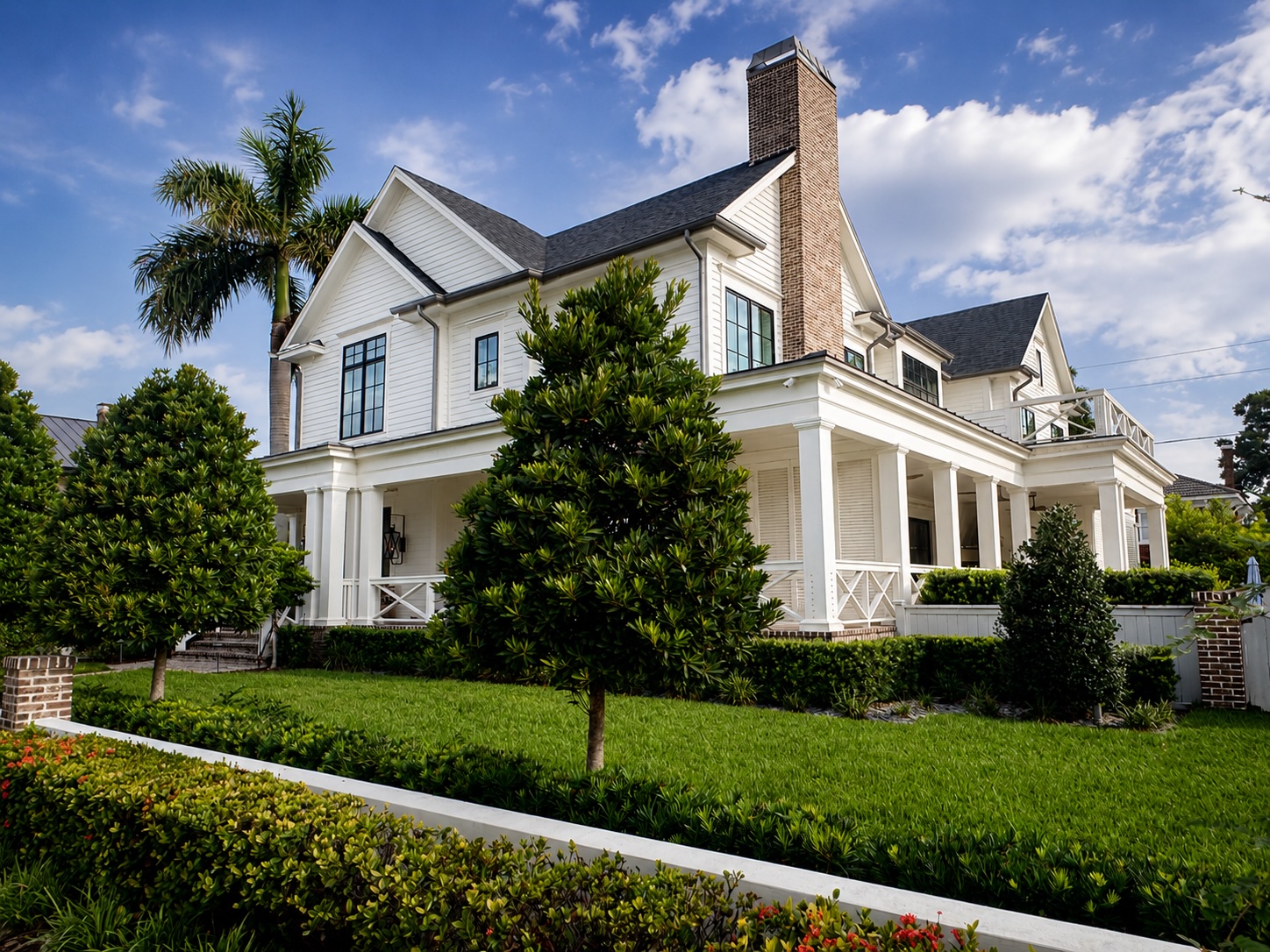
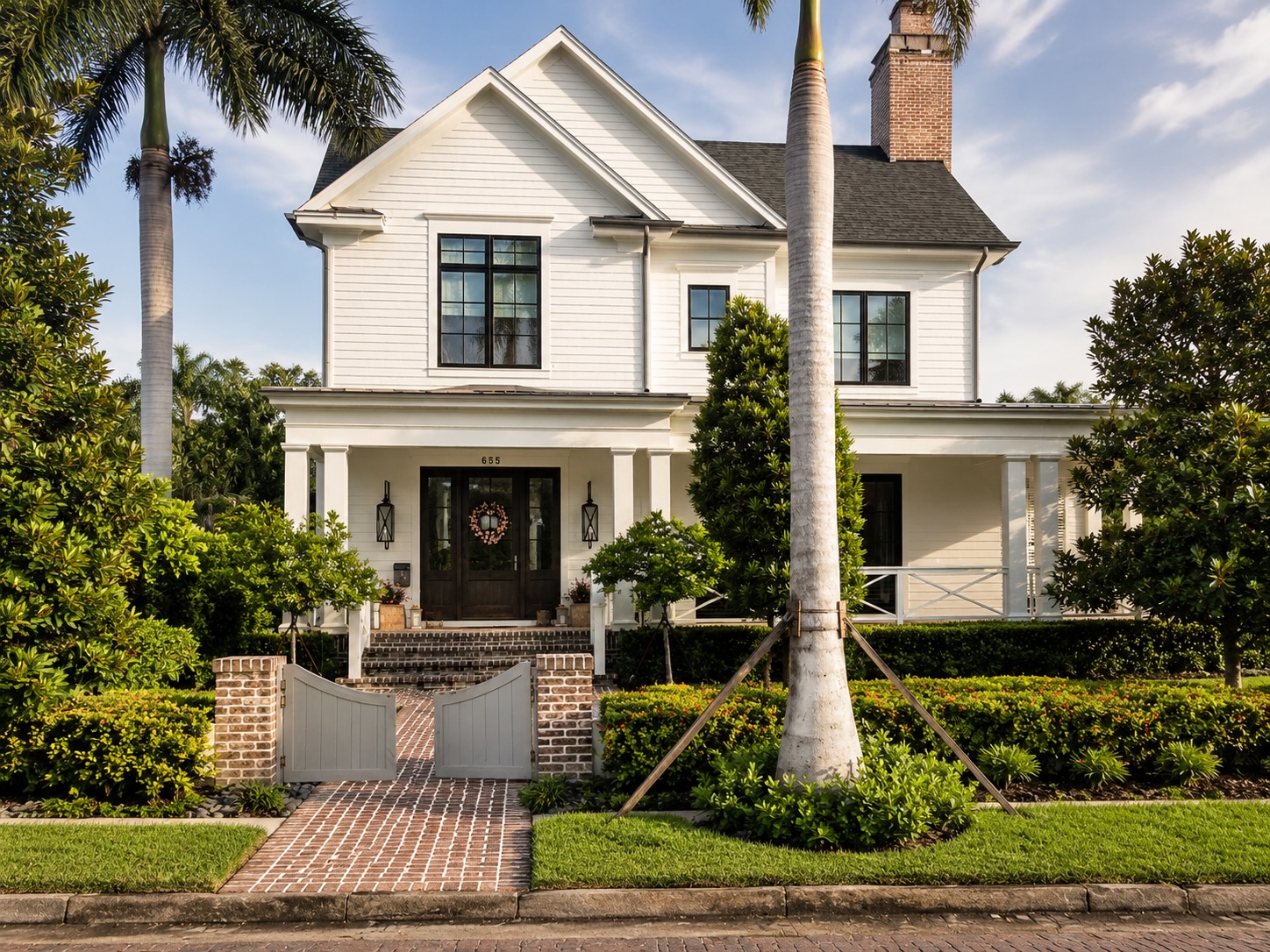
One of the pleasures of Old Northeast is that the houses rarely feel repetitive. Mediterranean Revival homes sit near Craftsman bungalows, traditional residences, cottages and newer homes designed to belong among them rather than replace them.
That variety is part of what makes walking these streets interesting. You notice arched entries, deep porches, old brick paths, tile roofs, mature gardens and homes that have been carefully updated without giving up the original scale of the street.
Architecture
Architecture You’ll See in Old Northeast
Old Northeast is sometimes described as though it has one historic look. It doesn’t. Part of its character comes from the number of architectural traditions represented within a relatively compact neighborhood.
Craftsman / Bungalow
Wide porches, low rooflines, substantial columns and deep overhangs make these houses particularly connected to the street. The porch often functions almost like an outdoor room between the house and the sidewalk.
Mediterranean Revival
Stucco walls, arches, tile roofs, courtyards and Spanish-influenced detailing became especially prominent during St. Petersburg’s 1920s boom years. Some of the neighborhood’s most recognizable houses draw from this tradition.
Colonial Revival
More symmetrical compositions and classical references create a very different presence from the Mediterranean houses nearby. Entry details, balanced façades and traditional proportions are common characteristics.

Frame Vernacular
Some of Old Northeast’s most appealing houses are not grand architectural statements. Straightforward wood-frame homes adapted to their period and climate are an important part of the neighborhood’s historic fabric.
Mission & Spanish Influences
Curved parapets, stucco, tile and other Spanish-derived elements appear throughout the broader architectural vocabulary of the neighborhood and became closely associated with Florida development during the boom era.
Later Homes & Infill
Old Northeast continued evolving after its earliest development periods. Later houses and contemporary infill sit among older buildings, making architectural compatibility, scale and renovation quality especially noticeable from block to block.
Not every block feels the same
Old Northeast is not one street repeated. A few turns can change the scale of the houses, the depth of the canopy, even the sound of the block.
Some streets open toward larger residences and a broader sky. Others tighten into cottages, quieter interior blocks, and a closer relationship between porch and sidewalk. Closer to the water, the air and the light shift; a few streets inland and the architecture settles into a different register.
That is why it helps to walk it. The neighborhood’s character is consistent, but the experience is not identical from block to block — and the right house often depends on finding the right stretch of street.
Understanding the name
Old Northeast vs. the North Shore Historic District
The terminology can be confusing.
People commonly use Historic Old Northeast, Old Northeast and North Shore Historic District when talking about this part of St. Petersburg. They are closely related, but the terms should not automatically be treated as identical in every legal or property-specific context.
The North Shore Historic District is listed in the National Register of Historic Places. Its documented boundaries are approximately 4th Street North on the west, 5th Avenue North on the south, 30th Avenue North on the north, and Tampa Bay and Coffee Pot Bayou on the east. National Register documentation also identifies the district with the Old Northeast neighborhood.
The City of St. Petersburg maintains separate historic-preservation information for National Register districts, local historic districts, contributing resources, individual landmarks and other potentially historic properties. Those distinctions can matter when evaluating a particular house.
A house being old, a house being within a National Register district, a house being classified as a contributing resource and a property being subject to a particular local historic designation are not automatically the same thing.
For someone considering renovation, replacement windows, an addition, demolition or another substantial exterior project, the better question is not simply, “Is this an Old Northeast house?”
What historic designation, if any, applies to this particular property?
That is worth verifying before making assumptions about what can or cannot be changed.
The details
What Survived
Part of Old Northeast’s character comes from the individual houses. Just as much of it comes from the neighborhood infrastructure and development pattern that remained around them.
The street pattern
Much of the historic street and block configuration remains recognizable today.
Brick streets & alleys
Red-brick paving remains one of the neighborhood’s most distinctive streetscape elements.
Granite curbs
Historic granite curbing survives along portions of the neighborhood.
Hex-block sidewalks
Hexagonal sidewalk blocks remain another small but recognizable piece of the historic streetscape.
Alleys & accessory buildings
Alleys, detached garages and historic garage apartments help reveal how these blocks were originally organized and used.
Landscaping
Trees and landscaping were considered important elements of the neighborhood’s early development rather than simply decoration added later.
What it feels like to live here
Old Northeast has a way of feeling connected to downtown without feeling like downtown. The streets are shaded, sidewalks are well used, and many blocks feel surprisingly quiet considering how close they are to the city’s restaurants, museums and waterfront parks.
Morning walks, bikes heading toward the waterfront and neighbors passing beneath the tree canopy are part of the rhythm here. Coffee, dinner and the parks along the bay are close enough to use, then leave behind when you turn back onto a residential street.
The homes
Homes in Old Northeast range from modest historic cottages to substantial estate properties. Renovation quality varies considerably, which makes individual property evaluation especially important here.
Buyers are often balancing architectural character with updates to roofing, electrical systems, plumbing, windows, foundations, insurance considerations and modern living spaces. Original details — millwork, porches, windows, tile — are part of the value when they have been kept. Additions and floor-plan changes are common; the question is whether they respect the original house or fight it.
Garages and pools appear on some properties and not others. Older systems are part of the inventory, not exceptions. The best houses tend to be the ones where the work behind the walls has been treated with the same care as the façade.
Buying here
Buying an Old Northeast House
Old Northeast houses reward people who pay attention.
Original windows, heart-pine floors, deep porches, plaster walls and old-growth trees may be exactly what makes a house irresistible. But when I walk through an older home here with a buyer, I’m also trying to understand the systems behind all that character — and what may have changed during the last 80, 90 or 100 years.
A beautifully renovated kitchen tells me very little about the electrical panel, plumbing below the house, roof over an addition or whether yesterday’s renovation was properly permitted.
Start with the four big systems
When I look past the first impression, I start with four systems: roof, electrical, plumbing and HVAC. They are the parts of an older house that most often determine how it will live, what it may need next, and how clearly the last decades of work were done.
They are also the systems commonly reviewed in a Florida four-point inspection.
Electrical: age matters, but condition matters more
Age is useful information. Condition is better. I want to see the panel, get a sense of the wiring, look for grounding, and notice whether later work was integrated into the house or simply added onto it.
A renovated room does not necessarily mean the electrical system behind it was renovated. Visible alterations — new outlets, old junctions, mixed generations of work — are often more telling than the finish of the kitchen.
Plumbing: look above and below
Supply plumbing is only part of the story. Drain lines and the sewer lateral can matter as much as what you see at the sink. On older homes, a sewer scope can be useful when it is appropriate to the house and the questions it raises.
New faucets do not mean new plumbing.
Roofs: don’t judge them from the street
I don’t judge a roof from the curb. Older houses here often evolved over time. The main house, a porch enclosure, an addition, a garage or a flat-roof section may have different ages, materials and conditions.
The question is not only how the front slope looks. It is how many roofs the house actually has, and whether they were built to work together.
Crawlspaces and foundations
When the house has a crawlspace, it can reveal moisture, plumbing, framing, previous repairs and how later additions connect to the original structure. I would rather understand those connections than guess from the rooms above.
Uneven floors in a century-old home aren’t automatically a verdict on the house. They’re a reason to understand why they’re uneven.
Original windows aren’t automatically a defect
Original wood windows can be an important part of a historic home’s character. Replacement is not automatically the right answer simply because something is old.
I look at condition, whether the windows operate, how they have been maintained, whether water has been getting in, how they perform, what storm protection exists, and what historic considerations apply to that particular house. Those are different questions from whether the windows are original.
The goal isn’t to turn a 1925 house into a 2026 house. It’s to understand the 1925 house you’re buying.
Look carefully at additions
Rear rooms, enclosed porches, converted garages and second stories may have been added decades after original construction. I want to understand when they appeared, how they were built, and what permit information exists — not to romanticize the original footprint, but to know what the house became.
Old houses tell their history through their additions.
Trees are part of the house decision
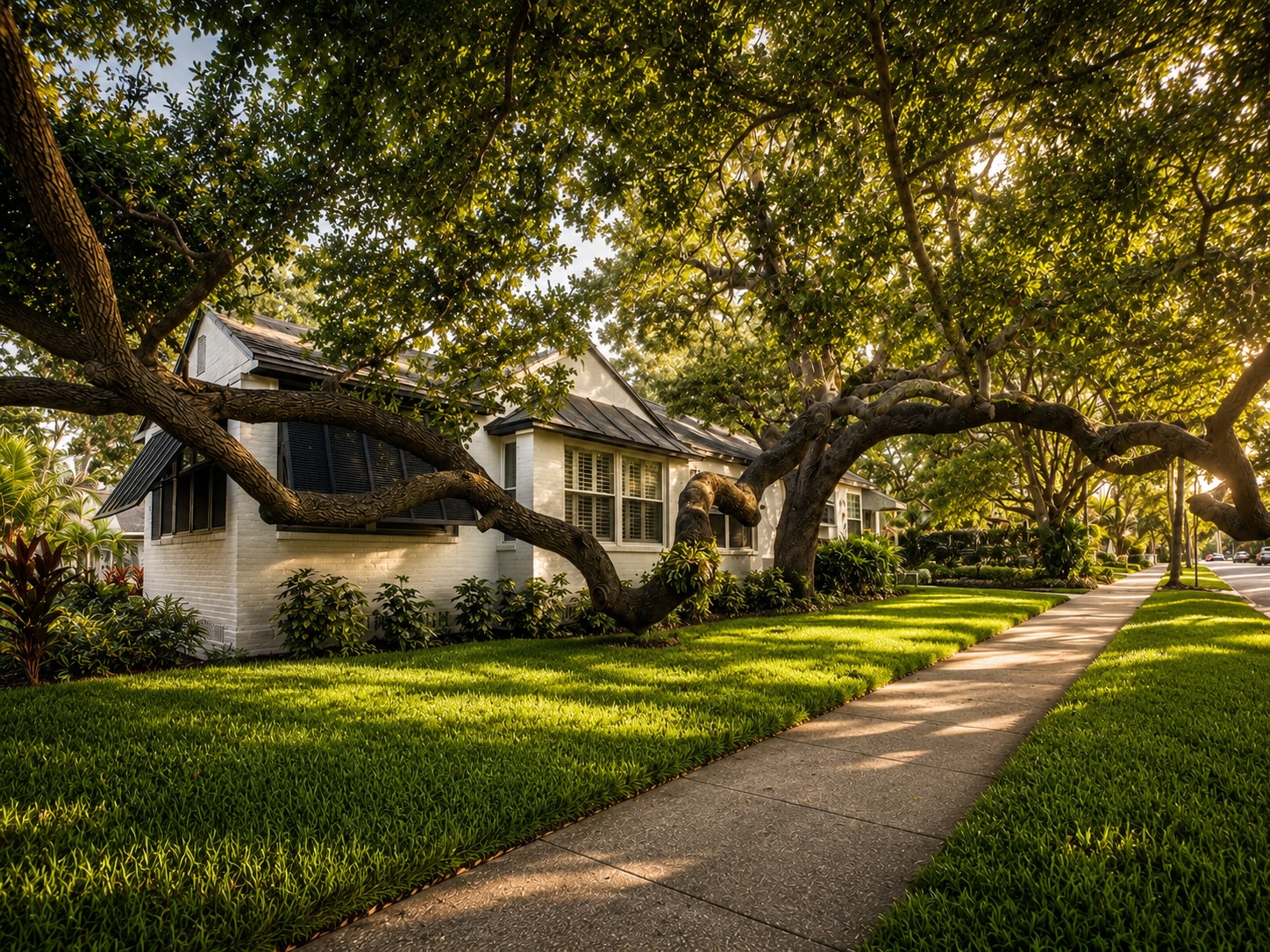
The mature live oaks and canopy are one of Old Northeast’s great assets. They are also part of the house decision. I notice roof proximity, large limbs, roots, drainage, hardscape and how the trees sit relative to underground systems.
Shade and character are real. So is the relationship between a tree and the structure beside it.
Permits and property history
Visible renovations rarely tell the whole story. I want buyers to review available property records, permit history and prior alterations — the paper trail, not only the finishes.
ROB’S OLD-HOUSE CHECKLIST
When I’m walking an Old Northeast house with a buyer, I’m looking beyond countertops and paint colors.
I’m noticing the rooflines. The floors. The windows. The electrical panel. Visible plumbing. The crawlspace. Drainage. Mature trees. Additions. Permit history. Flood and elevation considerations.
I’m also looking for something harder to put on an inspection report: does the house still make sense?
A hundred-year-old home doesn’t need to be perfect. But before you buy it, you should understand the story the house is telling you.
Close to the city. Still a neighborhood.
Historic Old Northeast sits immediately north of downtown St. Petersburg and stretches toward Coffee Pot Bayou. Its location puts waterfront parks, downtown dining, museums and the city’s cultural core within easy reach — without asking the residential streets to behave like a commercial district.
This is one of the neighborhoods I recommend to buyers who want character and walkability but still want the feeling of coming home to a residential street.
Nearby
- Downtown St. Petersburg
- Vinoy Park
- North Shore Park
- Coffee Pot Bayou
- Beach Drive
- The Pier
ROB’S POINT OF VIEW
What I look for when I show a house here
When I show a house in Old Northeast, I start with the block. The canopy, the light, how the sidewalk meets the porch, whether the street still feels like a street. A beautiful elevation on the wrong stretch of pavement is a different house than the same architecture under a mature live oak.
Then I look at the work. Original details are worth protecting. Additions should make the house more livable without arguing with it. Roofing, electrical, plumbing and windows tell you whether the care stopped at the paint. I would rather understand those things clearly than fall for a façade that has not been followed through.
The houses here can require more homework than newer construction. When the right house and the right block come together, there is very little else in St. Petersburg that feels quite like it.
I start with the block.
Journal
Why Some Streets Just Feel Better
A longer note on brick, canopy, light and the small details that make a St. Petersburg street feel like a place.
The lay of the land
Old Northeast, Block by Block
Historic Old Northeast holds together. Brick, mature trees, and a layered mix of houses give the neighborhood a presence that is hard to mistake. What changes, quietly, is the register — how close you are to downtown, how the canopy sits, whether a street still feels tucked in or begins to open toward the water.
These are not official sub-neighborhoods. They are ways of noticing. The character is consistent. The block is specific.
Southern edge
Closer to downtown and Vinoy Park, the connection to Beach Drive, the museums, and the waterfront parks is immediate. The streets themselves still feel residential. This edge is useful context for buyers who want walkability and proximity without asking the neighborhood to behave like the city center.
Interior Old Northeast
A few streets in, the canopy takes over and the rhythm quiets. Brick streets, porches, gardens, alleys, and a varied mix of historic architecture — this is where one block can feel noticeably different from the next.
Granada Terrace
Granada Terrace breaks from the grid. The streets curve, and the landscaping was part of the original idea, not something added later. Spanish and Mediterranean influence is stronger here. That character is visible from the street. It is not, by itself, a statement about what any one house can or cannot be changed.
Toward Coffee Pot Bayou
At the northern end, the relationship to the water and the bayou becomes more present. Some streets feel more open, less directly tied to downtown. The light, the breeze, and the street character are different than farther south.
Rob Notices
When I show a house in Old Northeast, I pay as much attention to the block as to the house. Canopy, how the street moves, what sits next door, the setbacks, how close you are to the water, and how the block feels — those change the experience before you ever open the front door.
Getting your bearings
A Few Landmarks to Get Your Bearings
A short list of places that help locate Historic Old Northeast on the ground — not a map, and not a claim that every house sits the same distance from each of them.
- Downtown St. Petersburg
- Vinoy Park
- North Shore Park
- Beach Drive
- Coffee Pot Bayou
- Granada Terrace
- 4th Street North
Questions about Old Northeast
Where is Historic Old Northeast in St. Petersburg?
Just north of downtown St. Petersburg, stretching toward Coffee Pot Bayou. Waterfront parks, Beach Drive and the city’s cultural core are a short distance away.
What types of homes are found in Old Northeast?
Mediterranean Revival homes, Craftsman bungalows, traditional residences, cottages and newer houses designed to sit among them. The mix varies from block to block.
How close is Old Northeast to downtown St. Petersburg?
Immediately north of downtown — close enough for restaurants, museums and the waterfront, while the streets themselves remain residential.
What should buyers pay attention to in older Old Northeast homes?
Renovation quality, original architectural details, and the condition of roofing, electrical, plumbing, windows and any additions. Insurance and how a house has been altered over time matter as much as the façade.
What makes Old Northeast different from other St. Petersburg neighborhoods?
Brick streets, mature live oaks and a layered mix of residential architecture give it a character that is both close to the city and distinctly its own.
Thinking about Old Northeast?
If you are considering a home here, I can help you understand the blocks, architecture, renovation quality and the small details that can make one property very different from the next.